Are you hesitating between kitesurfing and wingfoiling for your next trip to Madagascar? Good news: at Sakalava Lodge , you don't have to choose just one. But if you do have to decide for your first session, here are the criteria that really make the difference.
What exactly is kitesurfing?
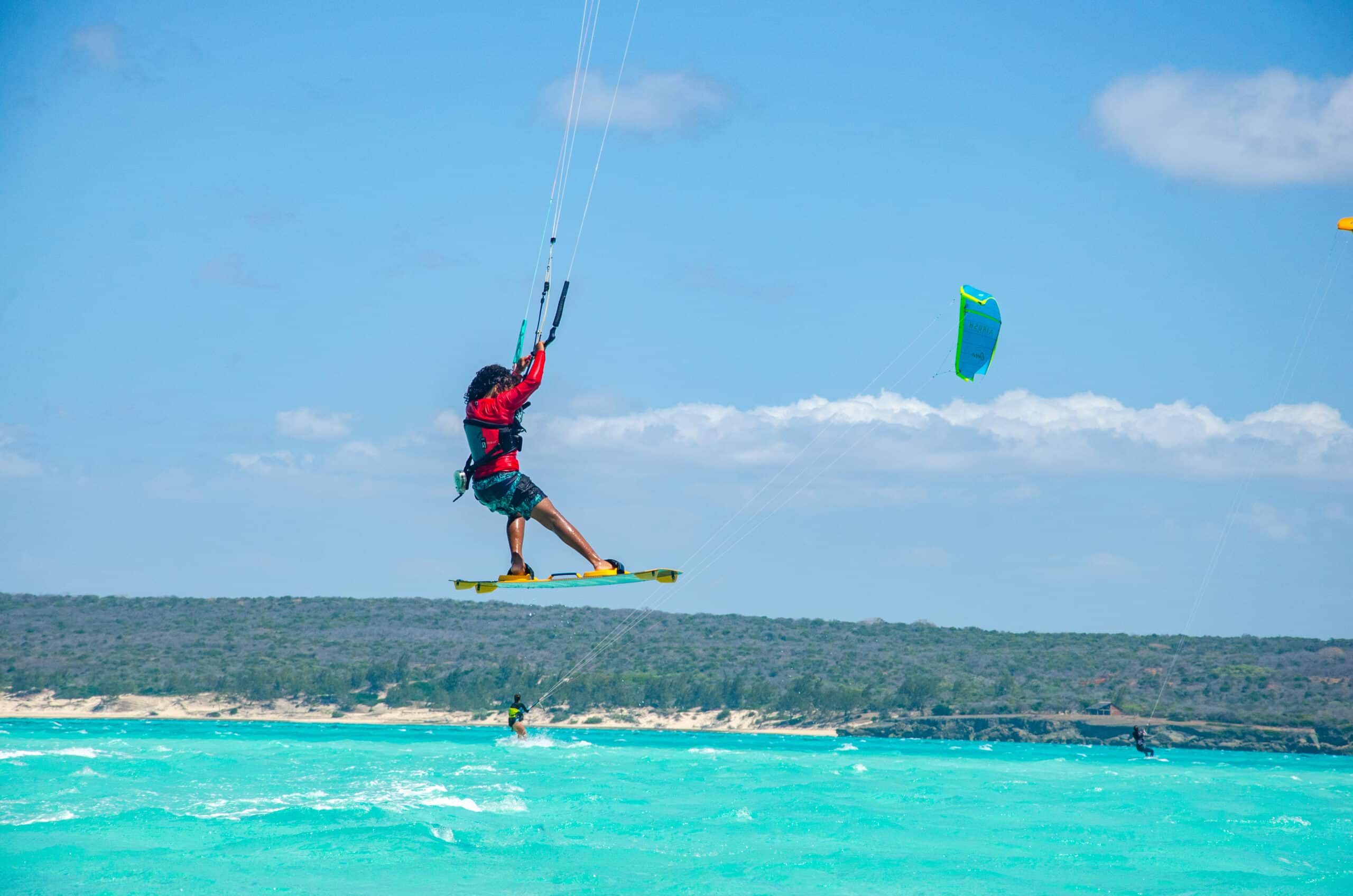
Kitesurfing is practiced with a kite connected to the rider by lines and a control bar. It's a sport of power and jumps: thrilling sensations, committed jumps, and technical progression towards freestyle or big air. It requires stronger winds (a minimum of 15 to 20 knots for comfortable progression) and a slightly longer learning curve at the beginning, while mastering kite control and waterstarts.
What exactly is wingfoiling?
Wing foiling combines a handheld inflatable wing with a board equipped with a foil that lifts the rider above the water. No lines to manage, no bar: the wing is controlled directly by hand, making it more intuitive for a first experience with towed watersports. It can be practiced in a wider wind range, including lighter winds, and offers a silent gliding sensation very different from kitesurfing.
5 criteria for choosing between kiteboarding and wingfoiling
| Criterion | Kitesurf | wingfoil |
|---|---|---|
| Wind needed | Strong wind (15-20 knots and more) | Works even in lighter winds |
| Learning curve | Longer at the start (wing control, waterstart) | Often faster learning curve |
| Sensations | Power, jump, speed | Gliding, flying above the water, silence |
| Materials to manage | Wing + lines + bar + board | Wing (in hand) + foil board |
| Ideal profile | Desire for technical progression and tricks | Looking for smooth gliding, a good complement in light winds |
What if you didn't choose? Practice both.
This is one of the great advantages of Sakalava Bay: the consistent wind often allows you to combine both disciplines during the same stay, or even on the same day. Many of our riders kitesurf in the morning and wingfoil in the afternoon, or vice versa, depending on the wind strength. Our all-inclusive package provides unlimited access to both sports, at no extra cost, so you can try them out before specializing.
Frequently Asked Questions
Is wingfoiling easier to learn than kitesurfing?
Overall, yes: without lines or a bar to manage, most beginners feel comfortable wingfoiling more quickly. Kitesurfing requires more sessions to master wing control and waterstarts, but progression remains accessible to everyone with IKO coaching.

Is it possible to practice kitesurfing and wingfoiling during the same stay?
Yes, it's even common in Sakalava Bay. Our all-inclusive package gives access to both equipment at no extra cost, and the consistent wind often allows you to alternate between the two disciplines depending on the day's conditions.
Does kitesurfing require more wind than wingfoiling?
In general, yes. Kitesurfing becomes comfortable from 15-20 knots, while wingfoiling remains practical with lighter winds, making it a good complement on days with weaker winds.
Which sport should I choose if I'm a beginner and want to progress quickly?
Kitesurfing remains the discipline most focused on jumps and aerial maneuvers. Wingfoiling prioritizes a gliding and flying sensation close to the water, less centered on jumps, but just as exhilarating in its own way.
Still undecided? Our IKO team will let you try both pieces of equipment as soon as you arrive to help you choose in real conditions on the spot.

For an overview before choosing, read our kitesurfing guide to Madagascar.